How Dental Crowns Help Preserve Tooth Structure
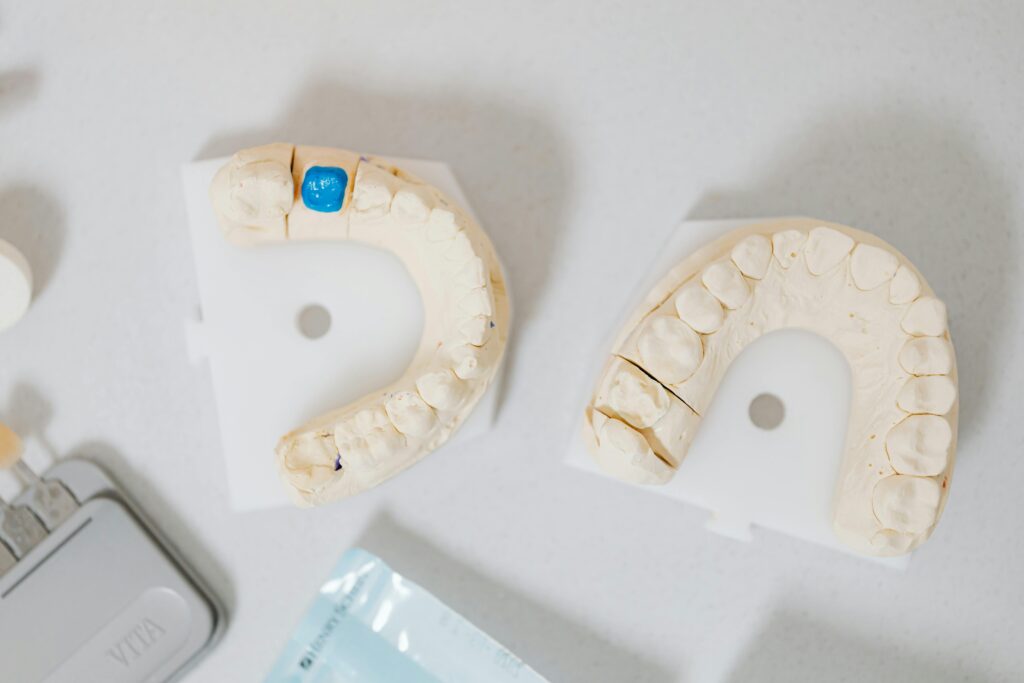
A dental crown is often described as a cap, but that shorthand misses the real point. A well-made crown is not simply something placed over a tooth for appearance. It is a structural restoration, designed to protect what remains of a damaged tooth, distribute biting forces more safely, and give the tooth a chance to stay functional for many more years.
That preservation role matters more than most patients realize. By the time a crown enters the conversation, the tooth has usually already lost some of its natural strength. It may have a large filling, a fracture line, deep wear, or a cavity so extensive that another direct filling would not hold up predictably. At that stage, the question is no longer whether the tooth is perfect. It is whether enough healthy structure remains to save it wisely. In many cases, Dental Crowns are the answer because they allow a dentist to reinforce a compromised tooth instead of waiting for it to break further.
The idea seems simple, yet the judgment behind it is rarely simple. Crowns can preserve tooth structure, but only when the diagnosis is sound, the preparation is conservative, and the restoration is designed around the tooth rather than around convenience.
What “preserving tooth structure” really means
Patients sometimes hear that a crown requires reshaping the tooth and assume that this means the dentist is removing healthy structure. That concern is understandable. No dentist should ever remove sound enamel casually. But preservation in dentistry is not just about keeping every millimeter untouched. It is about keeping the tooth restorable, functional, and comfortable over time.
A weakened tooth can fail in ways that are much more destructive than a planned crown preparation. A cusp can split off while someone is chewing bread with a hard seed in it. A crack can run deeper below the gumline. A heavily filled molar can fracture so badly that extraction becomes the only option. Compared with those outcomes, a carefully planned crown often represents controlled sacrifice for long-term preservation.
Think of a tooth like a load-bearing wall that has already been cut into too many times. If the structure is still standing but clearly vulnerable, reinforcement can keep the wall from collapsing. The goal is not to pretend the wall is untouched. The goal is to keep the building usable and safe.
When a filling is no longer enough
There is a point at which a tooth crosses from repairable with a filling to better served by a crown. That transition is not based on one universal measurement, but several practical factors tend to matter.
A small cavity on an otherwise solid tooth usually does well with a bonded filling. The remaining enamel supports the restoration, and the tooth still handles chewing forces naturally. A tooth with a very large filling is different. As the filling gets larger, the surrounding tooth becomes thinner and more likely to flex or crack under pressure. The restoration may still look fine on an X-ray, yet the biology and mechanics are already less forgiving.
Molars are a common example. Back teeth absorb heavy chewing forces, especially in patients who clench, grind, or favor one side. If a molar has lost one or more cusps, has recurrent decay around an old restoration, or has undergone root canal treatment, the risk of fracture rises sharply. In those cases, replacing one more large filling with another large filling can become a short-term patch rather than a durable solution.
I have seen this pattern often in practice settings where patients delayed treatment because the tooth was “not hurting much.” A person comes in after losing part of a tooth while eating something ordinary, sometimes a sandwich, sometimes a piece of roasted vegetable, not necessarily a hard candy or an ice cube. The break feels sudden, but the weakening process was gradual. In many of those cases, a crown placed earlier could have preserved more of the remaining tooth.
Why cracked and heavily restored teeth benefit from crowns
Natural teeth are remarkably strong, but their strength depends on continuity. Once large portions are removed by decay, old fillings, or wear, the tooth no longer distributes force the same way. Cusps can splay outward slightly during biting. Tiny crack lines can propagate over time. The tooth may become sensitive to chewing or to cold because the remaining structure is flexing.
A crown helps by binding and covering the prepared tooth so that forces are spread more evenly. On posterior teeth, this protection is especially valuable because the chewing load is high and repetitive. It is not unusual for a patient to say that a crowned molar feels “solid again.” That sensation is not imaginary. A good crown restores a more stable outer form and reduces the stress placed on weakened walls of the tooth.
This is also why crowns are often recommended after root canal treatment on back teeth. A root canal does not make the tooth dead in the dramatic sense patients sometimes imagine, but it does mean the tooth has already sustained significant structural loss from decay, prior fillings, or access preparation. The remaining tooth can be more brittle in practical terms because it is less intact. A crown protects what is left.
The balance between conservation and coverage
Crowns are valuable, but they are not automatically the most conservative option. The best dentists think in gradients, not absolutes. If a tooth can be predictably restored with a smaller bonded restoration, that may preserve more natural enamel. If a partial coverage restoration such as an onlay can protect the tooth without full circumferential reduction, that may be preferable in selected cases.
The key word is predictably. A conservative treatment that fails quickly and leads to a larger fracture is not truly conservative. On the other hand, placing a full crown on a tooth that could have succeeded with a less invasive option is also hard to justify.
This is where experience matters. The decision depends on how much tooth remains, where the margins of damage lie, whether cracks are present, the patient’s bite, hygiene, decay risk, and habits such as grinding. Two molars can look similar at first glance and still call for different treatment plans. One may do well with a bonded ceramic onlay. The other may need a full crown because too many walls are already compromised.
How the crown itself preserves the tooth
The protective value of Dental Crowns comes from several mechanics working together. First, the crown replaces missing external form, which means chewing pressure is directed along a shape designed to function properly. Second, it shelters the prepared tooth from direct wear and from the wedging forces that can split weakened cusps. Third, when margins are well-sealed and the patient keeps them clean, the crown helps reduce the chance that exposed compromised areas will continue to break down.
Margin design and fit are especially important. A crown that fits poorly can create its own problems, trapping plaque, irritating the gums, or allowing recurrent decay at the edges. Preservation is not just about placing a crown. It is about placing the right crown, with the right contours, on the right tooth.
Material choice also matters. Modern ceramics can be highly esthetic and strong, but they need enough thickness and proper support. Metal and porcelain-fused-to-metal crowns still have roles in certain circumstances, particularly where space is limited or forces are heavy. Gold, while less common today for cosmetic reasons, remains one of the most forgiving and durable restorative materials in posterior dentistry. It can be kind to opposing teeth and allows precise margins. Many dentists still speak about well-made gold restorations with a degree of respect earned over decades.
There is no single best crown for every tooth. The best crown is the one that respects the mechanical demands of that specific case.
Crowns do not save every tooth, and that matters
It is important to be honest about limits. A crown cannot fix a tooth with a vertical root fracture. It cannot overcome severe periodontal bone loss if the tooth lacks stable support. It cannot make up for active decay that extends too far below the gumline or into an area that cannot be predictably sealed. It also cannot protect a tooth forever if a patient continues heavy clenching without addressing it.
Sometimes patients hear that a crown preserves a tooth and assume it is the final answer no matter what. Dentistry is more nuanced. A crown is often a very good investment in tooth preservation, but only if the foundation is sound. If the remaining root structure is poor, or the ferrule, meaning the circumferential band of remaining tooth above the gumline, is inadequate, the prognosis changes. These details are not academic. They are often what separates a crown that lasts many years from one that fails early.
The role of timing
Timing can make a surprising difference in how much tooth structure can be preserved. A tooth restored before it fractures extensively usually gives the dentist more healthy material to work with. Margins can be placed more favorably, retention can be improved, and the risk of needing additional procedures is lower.
Delay tends to narrow options. A cracked cusp can become a deeper fracture. Recurrent decay around an old filling can progress under the surface before symptoms become obvious. The longer a weakened tooth remains under function without reinforcement, the greater the chance that damage will spread.
This does not mean every tooth with an old filling needs a crown immediately. It means that watchful delay should be purposeful, not accidental. If a dentist recommends monitoring, there should be a reason and a plan, not vague optimism.
What the preparation process means for preservation
Patients often focus on the final crown, but much of the preservation value lies in the preparation phase. A careful prep removes unsupported or decayed structure, creates space for durable material, and preserves as much healthy tooth as practical. Overpreparation is a problem. Underpreparation is also a problem because the crown may end up too thin, overcontoured, or mechanically weak.
Modern adhesive dentistry has helped dentists become more conservative in selected situations. Better bonding can preserve more enamel than older techniques allowed. Digital scanning and improved lab communication can also improve precision. Yet technology does not eliminate the need for judgment. The person using the technology still decides where to place the margin, how much reduction is necessary, and whether the tooth should be crowned at all.
A temporary Dental Crowns crown also plays a role that is often underestimated. A good temporary protects the prepared tooth, maintains spacing, and keeps the gums healthy until the final restoration is placed. When temporaries are poorly fitting or left too long, the final result becomes harder to optimize.
How crowns compare with other restorative options
Not every damaged tooth needs full coverage. Direct composite fillings are more conservative and can be excellent for smaller defects. Indirect inlays and onlays preserve more natural tooth than full crowns in many cases while still providing cuspal coverage where needed. Veneers have an entirely different purpose and generally address front-tooth esthetics rather than structural reinforcement of heavily compromised teeth.
What crowns offer is a broader protective envelope. They are often chosen when damage extends around much of the tooth, when the tooth needs substantial reinforcement, or when prior restorations have left too little reliable structure for a simpler approach. The trade-off is that crowns usually require more circumferential reduction than partial coverage options.
That trade-off should be acknowledged plainly. Patients appreciate candor when a dentist explains that a crown is not the smallest possible restoration, but may still be the most tooth-preserving treatment in the long term because it lowers the chance of catastrophic fracture.
The patient’s bite can determine success
A crown is not placed in isolation. It must function within a bite that may be stable, unstable, heavy, or parafunctional. Patients who grind at night, clench under stress, or have uneven contact patterns place restorations under very different conditions than patients with a light, balanced bite.
This is one of the most common reasons some crowns last exceptionally well while others encounter trouble sooner. If a patient has strong masseter muscles, visible wear facets, morning jaw fatigue, or a history of breaking fillings, the restoration plan should account for that. Sometimes the answer is a stronger material. Sometimes it is modifying the anatomy of the crown to reduce stress concentration. Often it also includes a night guard.
Ignoring occlusion is one of the quickest ways to undermine the tooth-preserving potential of a crown. A beautifully made restoration can still fail if it is repeatedly overloaded.
Aftercare is part of preservation, not an afterthought
Crowns fail less often from dramatic events than from ordinary neglect. Margins collect plaque just like natural tooth surfaces do. If brushing is rushed and flossing is inconsistent, recurrent decay can begin where tooth and crown meet. Gum inflammation can also compromise the health of the surrounding tissues, making the restoration harder to maintain.
Patients sometimes believe a crowned tooth can no longer decay. The crown material itself cannot decay, but the underlying tooth absolutely can, especially at the margin. That point is worth repeating in every restorative practice because it changes how people care for their mouths.
A few habits make an outsized difference:
- Clean along the gumline every day, especially where the crown meets the tooth.
- Use a night guard if clenching or grinding has been identified.
- Return for regular exams so small issues are caught before they become structural failures.
- Avoid using teeth as tools for opening packages or cracking hard foods.
- Report biting pain early, since it can signal a crack, high bite, or cement issue.
These are simple steps, but they protect the investment and the tooth beneath it.
What longevity really looks like
Patients often ask how long crowns last. The honest answer is that lifespan varies widely. Many crowns serve well for ten to fifteen years, and quite a few last longer. Some fail sooner because of decay, fracture, gum issues, bite stress, or limitations that existed from the start. Longevity depends as much on the condition of the underlying tooth and the oral environment as on the crown itself.
That range is not a weakness in the treatment. It reflects the reality that dentistry works inside a living system. Saliva, hygiene, diet, grinding habits, and previous damage all influence the result. A crown is not a warranty against future disease. It is a tool that significantly improves the odds of keeping a compromised tooth in service.
When preserving the tooth still requires difficult judgment
There are cases where the choice between a crown and extraction is not obvious. A tooth may be technically restorable, but only with deep margins, crown lengthening, a post, or other additional procedures. The patient may have limited access to care, financial constraints, or a medical history that affects healing. In those moments, the question is not simply whether a crown can be done. It is whether it should be done, given the likely return on effort and cost.
Good treatment planning respects those realities without becoming defeatist. Saving a tooth can be the right call even when it is complex. In other situations, recommending against a heroic restoration may be the more responsible way to preserve overall oral health. Professional judgment lies in knowing the difference.
Why crowns remain central to conservative dentistry
It may sound contradictory to call a crown part of conservative dentistry when tooth reduction is involved. Yet in many real clinical situations, crowns are exactly that. They preserve the part of the tooth that still has a future. They prevent further structural collapse. They convert a fragile, heavily restored tooth into one that can handle function again with more confidence.
The deeper truth is that conservation is not measured only by what is avoided today. It is measured by what is protected tomorrow. A crown earns its place when it keeps a cracked or weakened tooth from becoming an extraction omnidentalspecialty.com Dental Crowns case, when it stabilizes a molar after root canal treatment, or when it gives a patient many more years with a natural tooth that would otherwise continue to deteriorate.
That is why Dental Crowns remain such an important restorative option. When used thoughtfully, they do far more than cover damage. They preserve what can still be saved, and in dentistry, that is often the most valuable outcome of all.
Omni Dental Specialty
1690 E Gonzales Rd, Oxnard, CA 93036, United States
+1 805-410-9603
FAQ About Dental Crowns
How long do crowns last on teeth?
A dental crown often lasts about five to fifteen years, although some last longer. Material, the underlying tooth, oral hygiene and grinding habits affect longevity. Regular dental examinations help identify wear, decay or a loose crown; no lifespan is guaranteed.
How much does a tooth crown cost?
There is no single price for every crown. Material, laboratory work, the condition of the tooth and any additional treatment affect the fee. Ask for a written estimate and confirm your insurance benefits, exclusions and out-of-pocket costs before treatment.
What is the downside of crowns on teeth?
A conventional crown usually requires irreversible removal of some tooth structure. Possible problems include sensitivity, chipping, loosening and decay at the crown margin; some teeth later need root canal treatment. Discuss your tooth's condition, material choices and suitable alternatives with your dentist.